When the Machine Looks Stable, What Is Happening Inside the Mold?
“I used to think injection molding was complicated. Then came my toddler and our Chow-Chow. At least molding machines follow parameters.”
The observation comes from Szabolcs Horváth, PhD, Key Account Manager at Cavity Eye. It brings a little humor to a serious production challenge: a machine can follow its set parameters while parts from different mold cavities begin to vary.
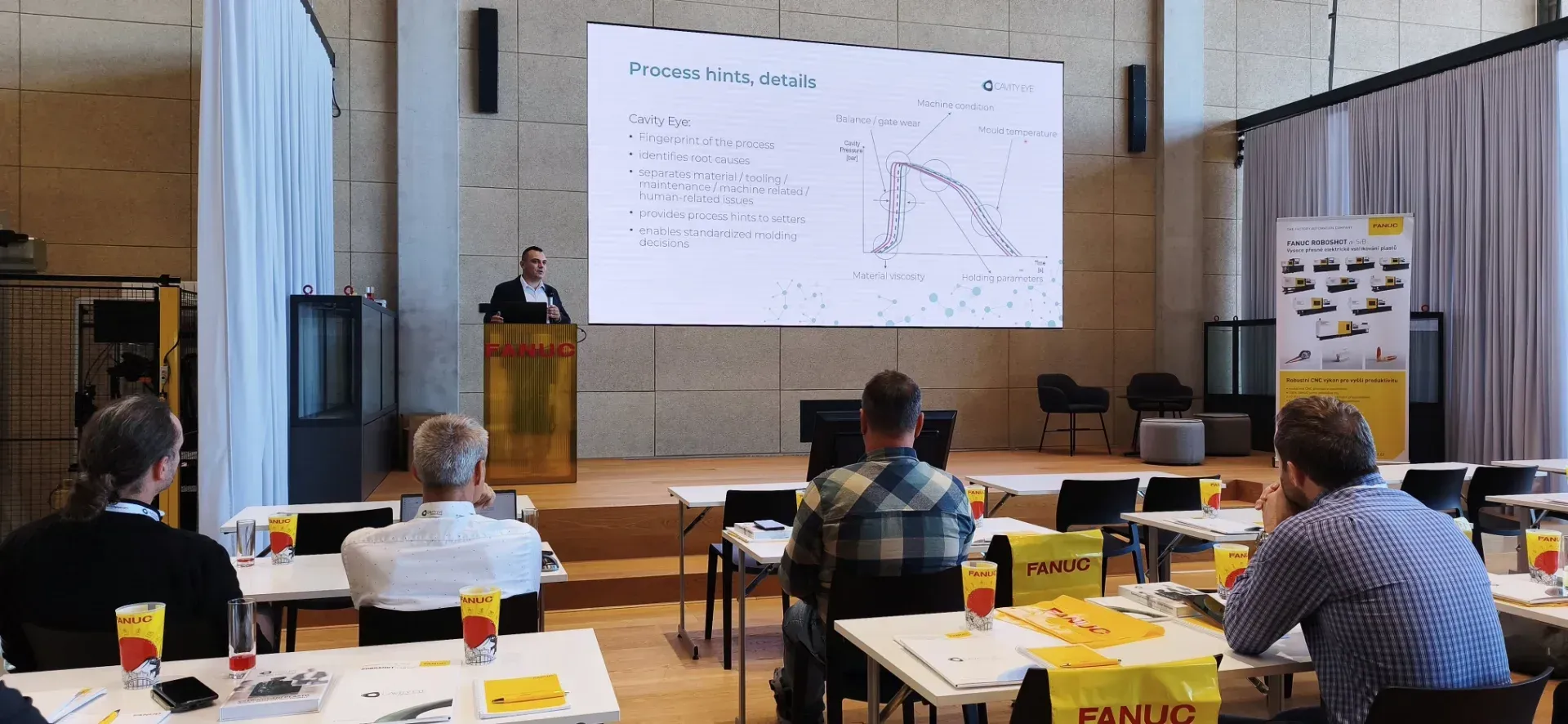
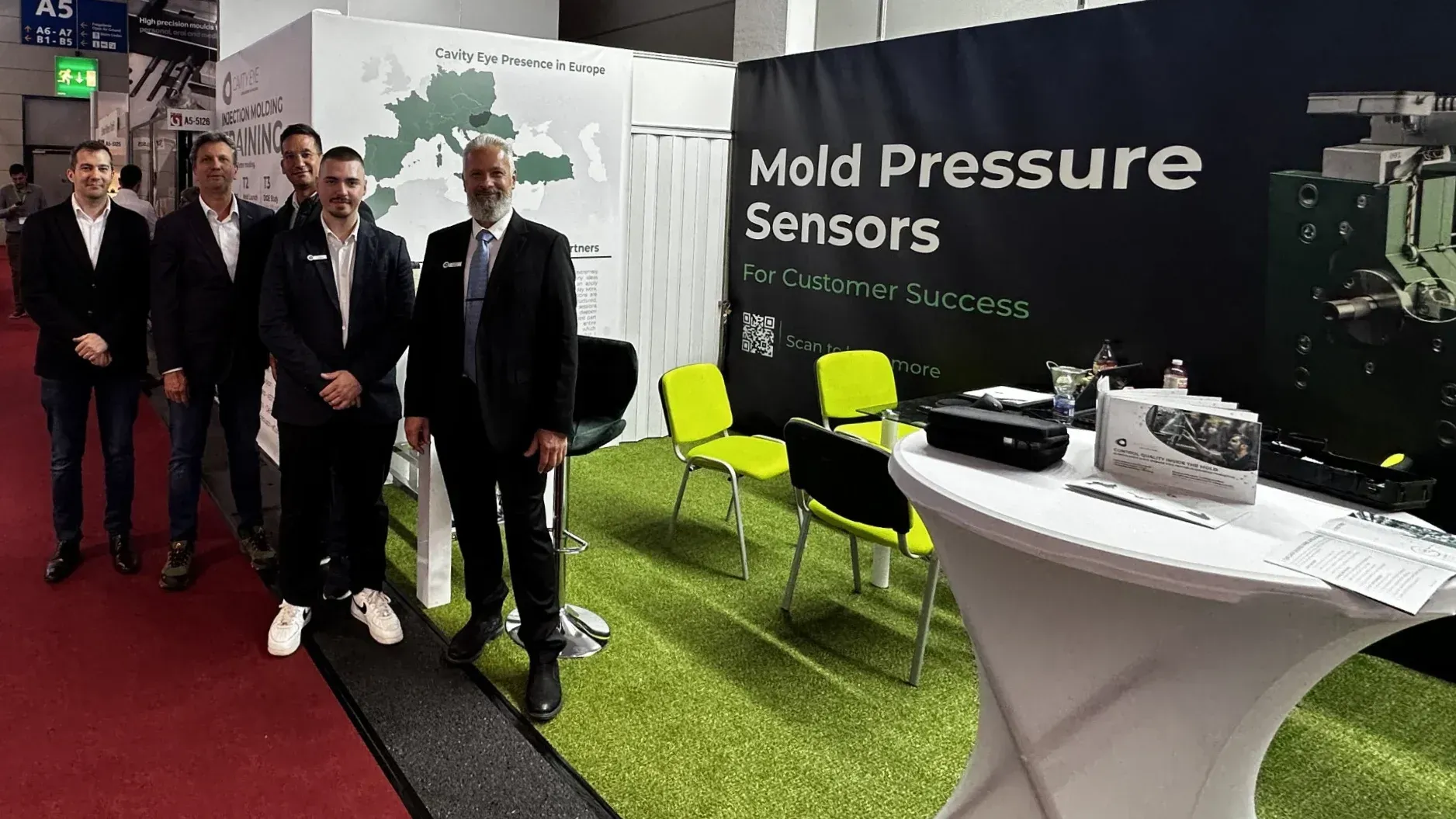
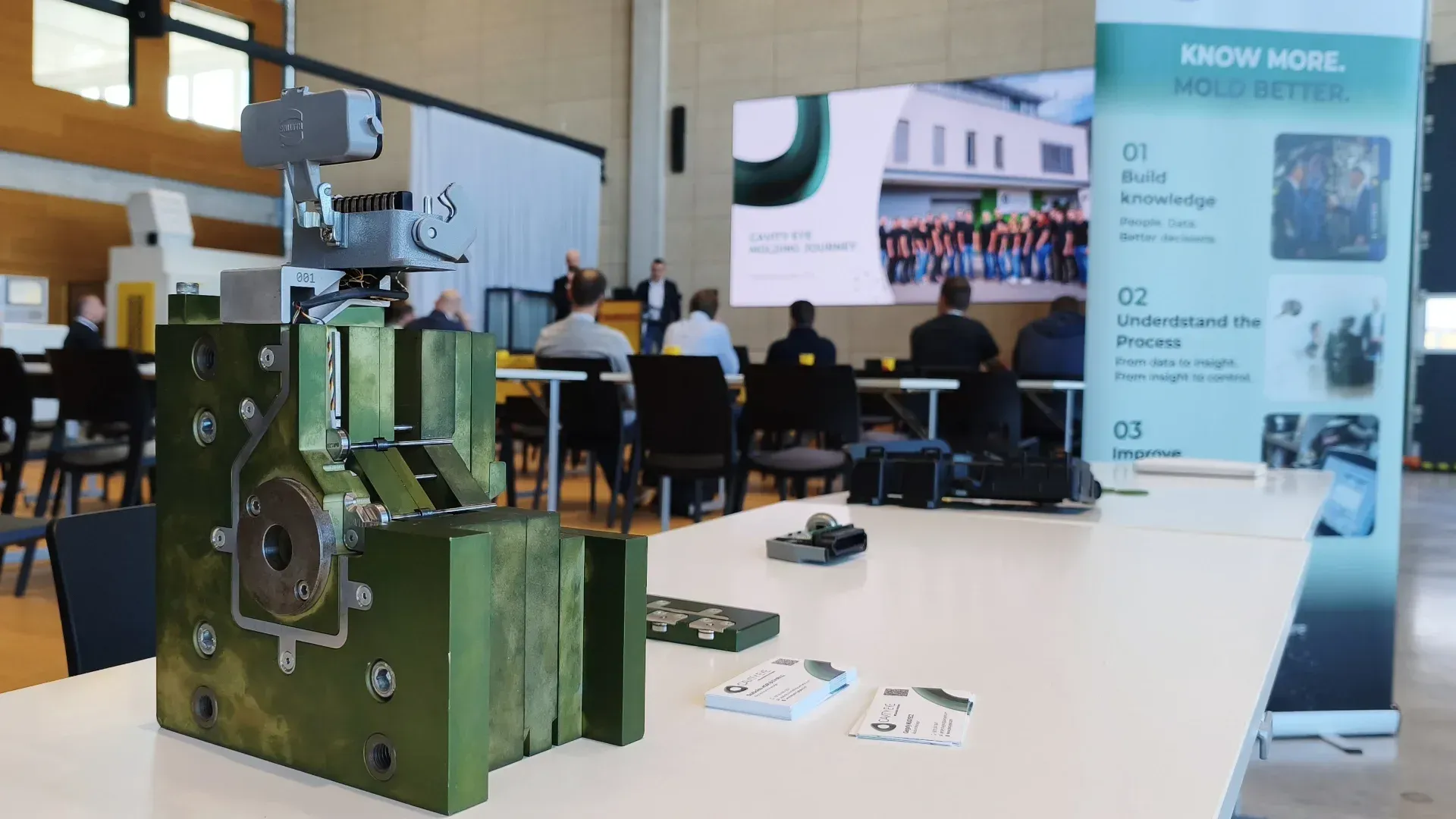
On September 23, Cavity Eye and FANUC Czech held a joint workshop in Prague to explore what happens between the machine settings and the finished part. Representing Cavity Eye were Szabolcs Horváth, PhD, Key Account Manager; Gergely Hugyecz, Account Manager; and Csaba Csipke, Application Engineer. For our team, the event was also an opportunity to introduce Cavity Eye to professionals in the Czech market and learn more about their production challenges.
What the machine cannot show on its own
An injection molding machine provides essential information about each cycle. Yet differences in filling and pressure can develop inside individual cavities before a quality issue becomes obvious in the finished part. The machine parameters may remain within their set limits while the mold tells a more detailed story.
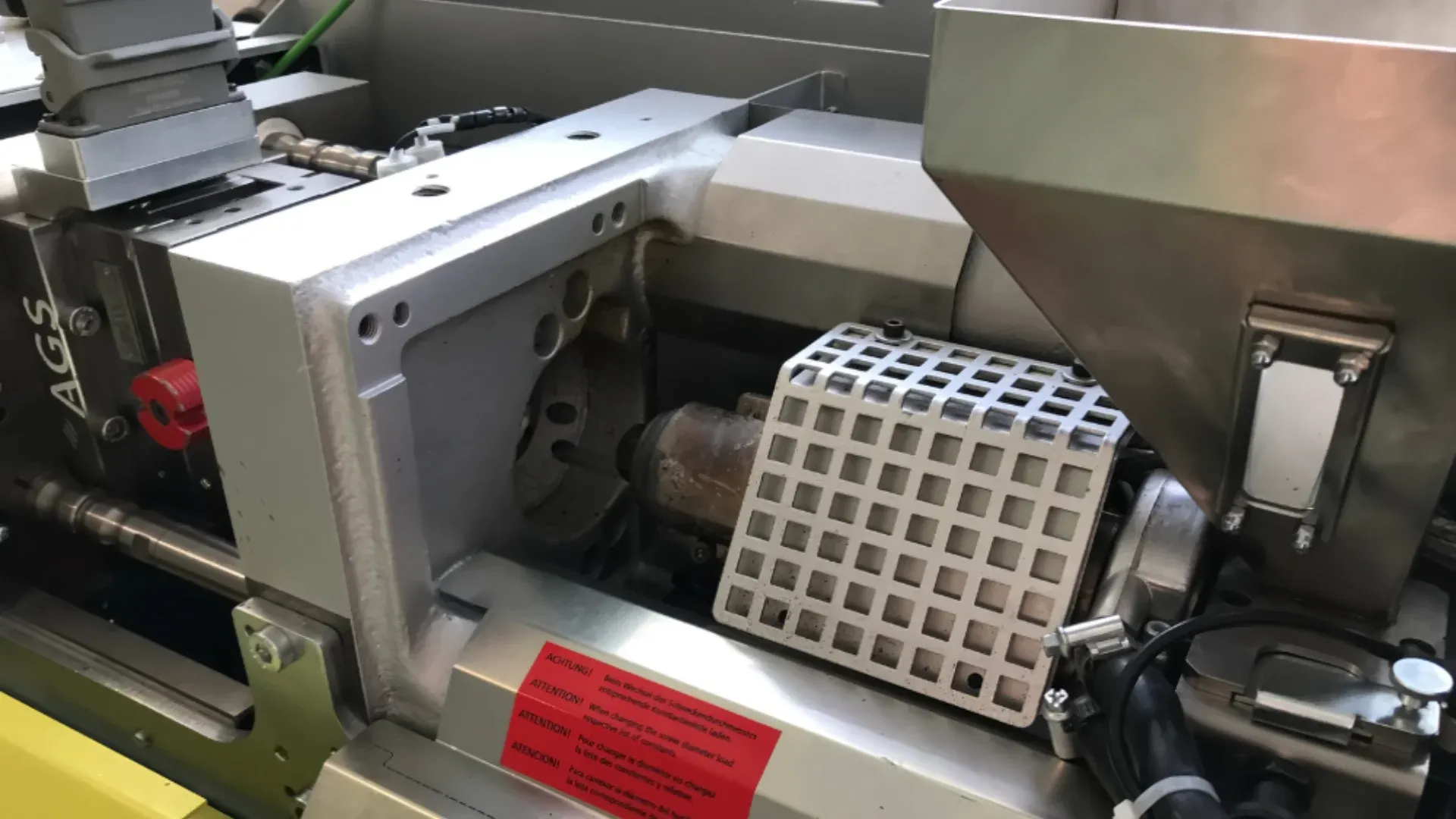
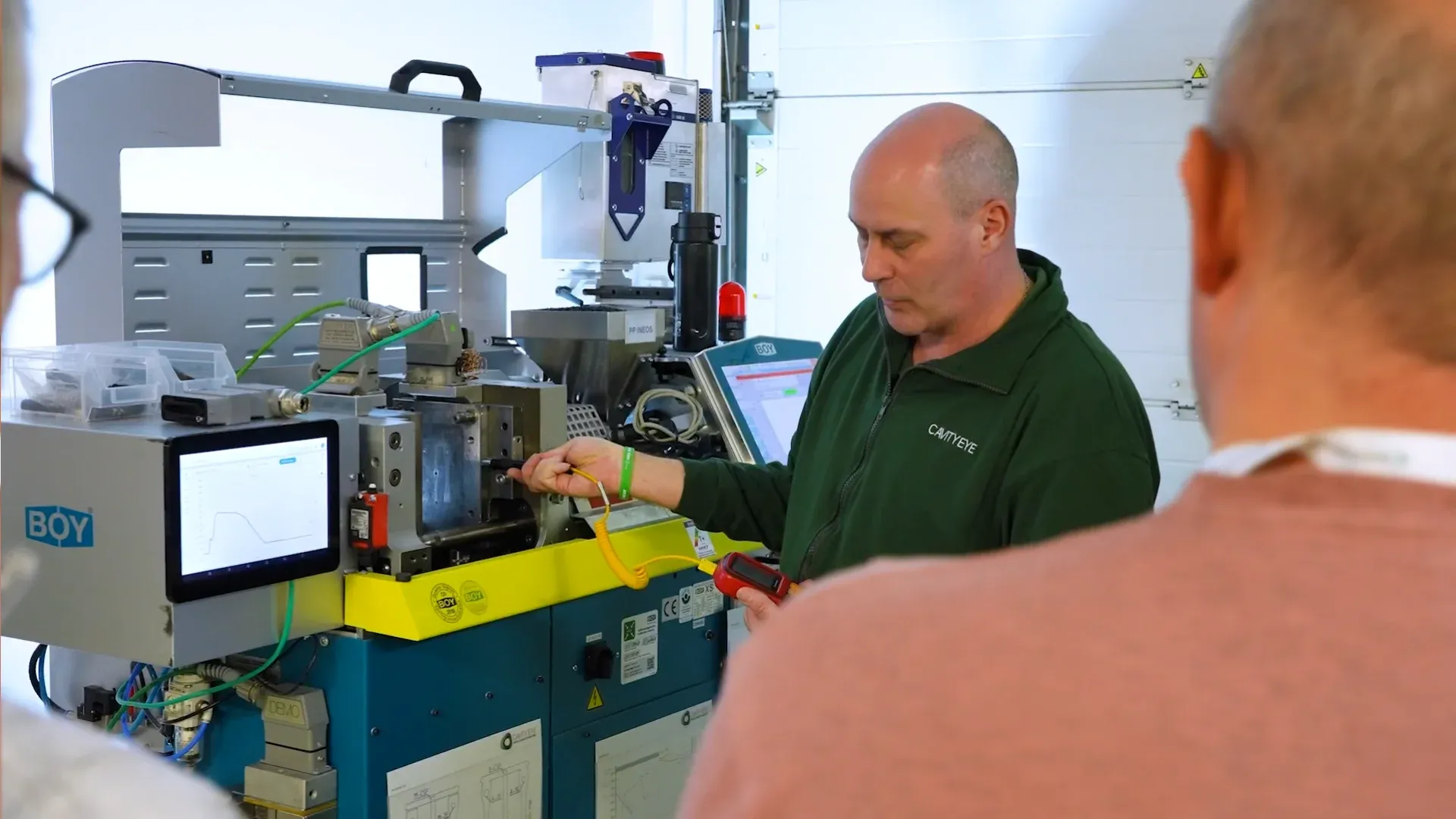
That connection was central to the workshop. FANUC presented its technologies across mold making and injection molding, while Cavity Eye focused on measuring the process inside the mold. The practical demonstration brought FANUC’s ROBOSHOT together with Cavity Eye’s cavity pressure measurement, showing how these two sources of information can help engineers examine process variation.
The discussion addressed questions familiar to molding and quality teams: Why do parts from different cavities behave differently? Where should troubleshooting begin when machine settings have not changed? What evidence can help a team identify a developing problem?
Turning measurements into decisions
Cavity Eye’s presentation included examples from previous projects involving short shots, mold transfer and tool maintenance. They illustrated how cavity pressure data can help teams investigate uneven filling, establish a process baseline and compare conditions when a mold moves into production.
The aim is to make troubleshooting more focused. When a part changes, data from inside the mold can help narrow down possible causes and guide the next engineering decision.
The workshop gave our team an opportunity to exchange ideas with Czech molding professionals and hear about the challenges they encounter in practice. Thank you to FANUC Czech for hosting the event and to everyone who joined the discussion.
Would you like a clearer view of what happens inside your mold?
Contact Cavity Eye to discuss cavity pressure measurement, process development or training for your team.